Dent Removal Options: Traditional vs. Paintless Dent Repair
December 29, 2025 4:14 pm Leave your thoughtsDents and dings on a vehicle can be more than just cosmetic issues. Whether caused by an errant shopping cart, a fender bender, or a sudden hailstorm, damage to your vehicle’s exterior can affect its value and appearance. Thankfully, there are several methods available for dent removal, each with its own advantages and considerations. Among the most common are traditional dent repair techniques and paintless dent repair (PDR). Understanding how these two approaches differ is essential for making an informed decision about how to restore your vehicle efficiently, affordably, and without compromising quality.
Understanding Traditional Dent Repair
Traditional dent removal techniques have been around for decades and are often used for larger or more complex damages. This method involves a process of sanding down the damaged area, filling it with body filler, and then repainting it to match the rest of the vehicle. The affected area is first stripped of its paint and smoothed out as much as possible. Once the filler is applied and shaped, multiple layers of paint and clear coat are added and then polished to achieve a seamless look.
While traditional methods are effective, they can be time-consuming and expensive. Repainting requires a precise color match, and any discrepancies can be noticeable. The process also tends to reduce the resale value of a vehicle, particularly if the repair work is evident. Additionally, because it involves multiple steps and materials, this type of dent repair can take several days or even longer depending on the severity of the damage.
One of the main advantages of traditional dent repair is its ability to handle more severe damage. Deep dents, sharp creases, and areas where the paint has been cracked or chipped often require this level of intervention. For vehicles with extensive damage from collisions or accidents, this may be the only viable option. However, for minor dents or dents located in accessible areas, this method may be excessive compared to other available options.
The Rise of Paintless Dent Repair (PDR)
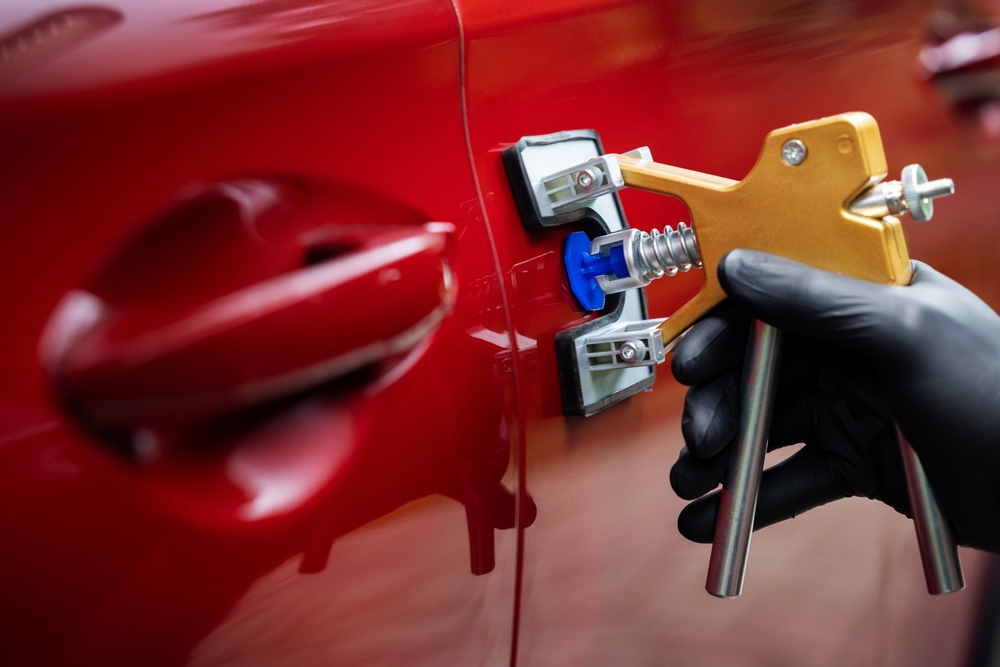
Paintless dent repair, also known as PDR, has revolutionized the way small dents and dings are handled. This technique is based on manipulating the metal back to its original form without affecting the paint. Using specialized tools, trained technicians access the backside of the dent and apply controlled pressure to massage the panel back into shape. Since the process does not involve sanding, filling, or repainting, it maintains the factory finish and integrity of the vehicle.
PDR is ideal for minor dents where the paint is still intact, such as those caused by hail damage, light collisions, or parking lot mishaps. It is widely regarded as a more cost-effective and quicker solution. In many cases, the repair can be completed in a matter of hours, and because there is no need for materials like paint or filler, the overall cost is significantly lower.
The popularity of PDR has grown considerably, especially in areas prone to hailstorms. Hail damage repair can involve dozens or even hundreds of small dents, making PDR the most efficient solution. Insurance companies also prefer this method in applicable cases, as it reduces both repair time and expense.
However, PDR does have limitations. It is not suitable for areas where the paint has been damaged or where dents are located near the edge of panels. It also requires a certain level of expertise, and poorly executed PDR can lead to uneven surfaces or new damage. That said, when performed by skilled professionals, PDR offers a nearly invisible repair that preserves the original aesthetics of the vehicle.
Comparing Time and Cost
One of the key differences between traditional dent removal and paintless dent repair is the time required to complete the job. Traditional repairs can take several days, particularly if the damage is extensive and requires repainting. The labor-intensive nature of the process, along with the time needed for paint to cure and be polished, can prolong the repair timeline significantly.
In contrast, PDR is often completed the same day, depending on the number and location of dents. Because it doesn’t require waiting for paint or fillers to dry, the turnaround time is much shorter. For busy individuals or businesses that rely on their vehicles daily, the convenience of PDR can be a deciding factor.
Cost is another major consideration. Traditional repairs often involve high labor and material costs. Matching paint, purchasing fillers, and paying for skilled labor add up quickly, especially if the vehicle needs to be repainted entirely. Paintless dent repair typically costs less because it eliminates many of these steps and uses fewer materials.
However, cost should not be the only factor. The choice between traditional and paintless methods should be based on the extent and type of damage. In some cases, opting for the less expensive option could result in a subpar outcome if the damage is too severe for PDR to handle effectively.
Effect on Vehicle Value and Appearance
Preserving a vehicle’s original paint is crucial to maintaining its value. Paint from the factory has a durability and quality that is difficult to replicate. Traditional repairs, despite best efforts, can sometimes result in mismatched paint or minor imperfections in the finish. These changes can affect resale value, especially for newer vehicles or those in otherwise pristine condition.
Paintless dent repair maintains the original paint, which is a significant benefit for vehicle owners concerned about resale or lease return conditions. The seamless nature of PDR, when done correctly, makes the damage virtually undetectable. This not only improves aesthetic appeal but also retains the vehicle’s value more effectively.
Moreover, because PDR doesn’t alter the structural composition or finish of the panel, it avoids potential future issues such as paint fading or cracking that sometimes occur with traditional repainting. For car enthusiasts, collectors, or those leasing their vehicles, PDR presents an appealing option that prioritizes long-term value and integrity.
When to Choose Each Method
The choice between traditional dent removal and paintless dent repair depends largely on the nature and location of the damage. For minor dents where the paint remains intact and the panel is accessible from behind, PDR is usually the preferred method. It is faster, more affordable, and retains the vehicle’s factory condition.
Hail damage repair is a prime example of where PDR shines. With multiple shallow dents across the surface of a vehicle, traditional methods would be costly and time-consuming. PDR technicians can efficiently remove dozens of dents without altering the paint, restoring the vehicle to its original look.
However, for damage that includes cracked paint, sharp creases, or dents near the panel edges, traditional methods are more reliable. These scenarios often require more intensive work to ensure structural integrity and visual consistency. A body shop can also address underlying issues such as rust or deeper damage that PDR cannot resolve.
In some cases, a combination of both methods may be necessary. Skilled technicians often assess each dent individually and determine the best approach based on factors such as panel material, location, and extent of the damage.
Conclusion
Choosing the right dent removal method is crucial to restoring your vehicle’s appearance and protecting its value. While traditional dent repair offers a solution for severe or complex damage, paintless dent repair provides a faster, more cost-effective, and less invasive option for minor dents and hail damage. Each technique has its place, and the decision should be guided by the condition of the dent, the location of the damage, and your long-term goals for the vehicle.
Whether dealing with a single parking lot ding or the aftermath of a hailstorm, understanding your options empowers you to make a smart choice. Consult with a trusted repair professional to evaluate the damage and select the method that delivers the best results with minimal disruption.
Need an Auto Body Shop in NJ?
Family owned and established in 1953, Lentz Auto Body has been serving Belford and Middletown for over 60 years. Here at Lentz Auto Body, we provide superior, experienced service for your vehicle. Now with all new ownership and management, Lentz Auto Body is your one-stop shop for all things collision repair and body work. Some of our major services include collision and auto body repair, dent repair, auto restoration, auto painting, custom auto painting, car detailing, and more! If you need collision repair or auto body services in Middletown, give us a call or stop in today for an estimate. Our friendly staff and professional mechanics are here, waiting to assist you!
Categorised in: Dent Repair
This post was written by admin